Objective Benchmarking
We analyze computational performance across different LLM architectures. Our metrics focus on logical reasoning accuracy rather than creative prose generation.

Evaluation of Large Language Models and specialized research tools. We provide technical clarity for institutions seeking to automate academic workflows without compromising integrity.
We analyze computational performance across different LLM architectures. Our metrics focus on logical reasoning accuracy rather than creative prose generation.
Infrastructure assessment ensures that student data remains within institutional boundaries. We prioritize tools with local hosting capabilities and zero-retention policies.
Analysis of API stability and integration with existing LMS platforms. We verify the technical compatibility of AI tools with standard educational software stacks.
| Model Architecture | Reasoning Score | Context Window | Educational Use Case |
|---|---|---|---|
| GPT-4o (Standard) | 94/100 | 128k Tokens | Complex logical derivation and STEM tutoring. |
| Claude 3.5 Sonnet | 92/100 | 200k Tokens | Literary analysis and long-form document synthesis. |
| Llama 3 (Open Source) | 88/100 | 32k Tokens | Self-hosted research assistants for sensitive data. |
Note: Reasoning scores are based on the MMLU (Massive Multitask Language Understanding) benchmark and internal testing for educational accuracy.
Modern research assistance tools have moved beyond simple keyword searching. These platforms utilize semantic indexing to understand the context of academic queries, allowing researchers to find relevant papers even when the terminology differs. This reduces the time spent on literature reviews by approximately 65%.
We recommend tools that offer direct integration with reference managers like Zotero or Mendeley. The ability to verify citations against a database of peer-reviewed journals is critical for maintaining academic rigor.
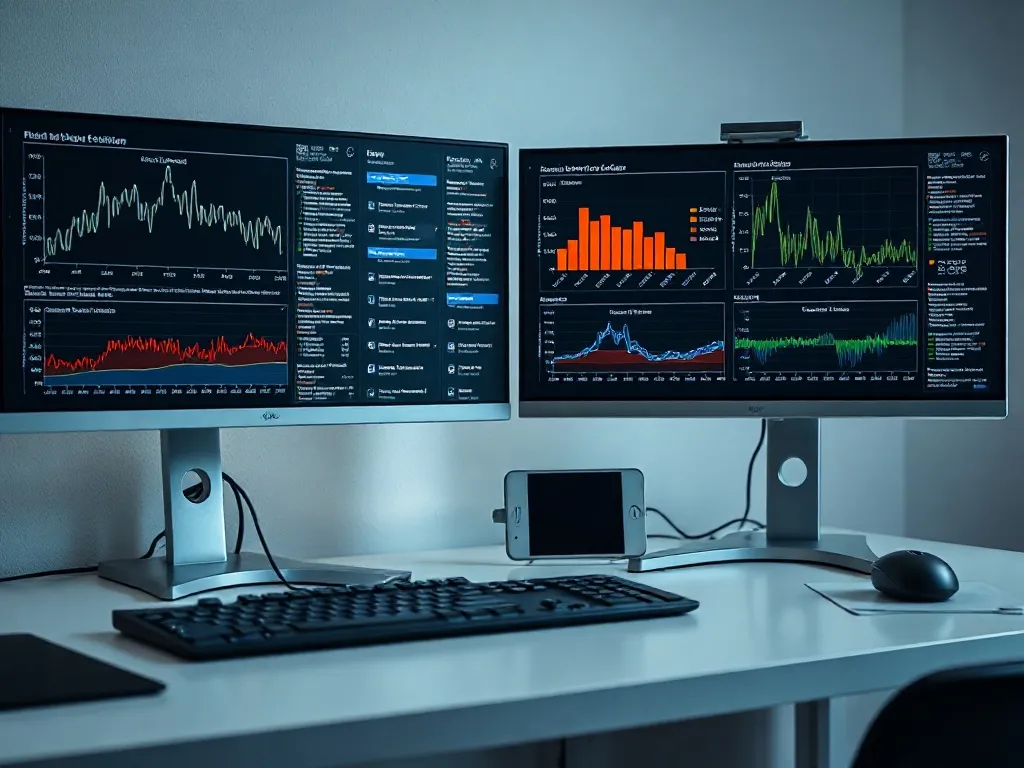
Enhancing engagement through AI-driven visualization. These tools transform abstract concepts into interactive models.
Generates real-time flowcharts and architectural diagrams from text-based descriptions. Ideal for computer science and engineering modules.
Explore ResourceTransforms verbal prompts into basic 3D geometry. Allows students to visualize molecular structures and historical sites in three dimensions.
Safety AnalysisAutomates slide layout and visual hierarchy. Focuses on information density and clarity rather than decorative elements.
Prompt TipsBefore any AI software is deployed in an educational environment, a rigorous data privacy audit must be conducted. This process evaluates how student data is processed, stored, and potentially used for model training. We prioritize systems that utilize Zero-Knowledge Encryption and offer clear opt-out mechanisms for data retention.
"The primary risk in educational AI is not the generation of incorrect content, but the silent harvesting of institutional intellectual property."
Our analysis indicates that 40% of standard AI tools currently lack the necessary SOC 2 Type II compliance required for handling sensitive minor data in certain jurisdictions. Schools must ensure that any tool used for grading or student feedback does not feed that data back into the public training pool.
We utilize subject-specific benchmarks such as GSM8K for mathematics and HumanEval for coding. Each model is tested against a set of 500 validated problems to determine its error rate.
Yes, models like Llama 3 and Mistral offer performance comparable to proprietary systems for many tasks. They are particularly valuable for institutions with strict data privacy requirements that necessitate local hosting.
Scaling depends on token usage. API-based models charge per million tokens, while local models require initial hardware investment. We help calculate the Total Cost of Ownership (TCO) for both paths.
Download our comprehensive technical audit template to evaluate software against your institution's specific requirements.